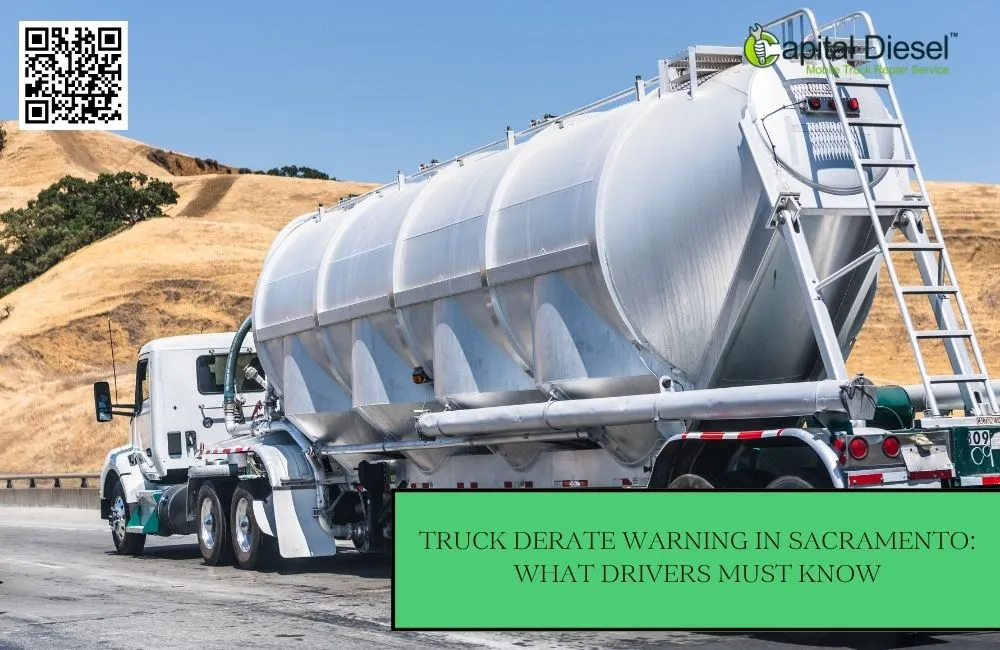
Truck Derate Warning in Sacramento: What Drivers Must Know
You're hauling a loaded trailer through Sacramento when your truck suddenly loses power. The accelerator responds slowly, climbing even a slight grade becomes difficult, and a warning appears on the dashboard. Your engine is still running, but it no longer delivers its normal performance.
This situation may indicate an engine derate, a protective function that limits engine power or vehicle speed when certain mechanical, electronic, or emissions-related problems are detected.
For commercial drivers traveling Interstate 5, Interstate 80, or Highway 99, understanding a derate warning can make the difference between a manageable repair and an expensive roadside breakdown.
Knowing what causes engine derating, how to respond safely, and when to request professional Mobile Truck Repair helps protect both the vehicle and its operator.
What Does a Truck Derate Warning Mean?
A truck derate warning means the engine control system has detected a condition that requires reduced engine performance.
Depending on the engine manufacturer and the fault involved, the system may limit available torque, reduce maximum engine speed, restrict vehicle speed, or initiate a more severe operating restriction.
Derating is not always evidence of major engine damage. Sometimes, the problem involves a sensor, wiring connection, or emissions component. Other times, it signals a condition that could damage the engine if operation continues.
Modern diesel trucks use electronic control modules to monitor operating conditions and respond when readings fall outside acceptable limits.
A derate is therefore a symptom of an underlying problem, not a complete diagnosis.
Effective Truck Repair requires identifying the fault responsible for the restriction rather than simply attempting to clear the warning.
Why Do Diesel Trucks Enter Derate Mode?
Several systems can trigger reduced engine performance, but emissions-related faults are common in modern heavy-duty diesel trucks.
The diesel particulate filter (DPF), selective catalytic reduction (SCR) system, diesel exhaust fluid (DEF) delivery components, and associated sensors work together to control exhaust emissions.
When the control module detects certain failures or compliance-related conditions, it may activate a warning followed by an engine derate.
Other causes include excessive engine temperature, low oil pressure, fuel delivery problems, turbocharger faults, or electronic control issues.
Not every warning follows the same sequence. The response depends on the engine, emissions system, model year, and specific diagnostic fault.
Truck owners searching for Diesel Mechanics Near Me should look for technicians who understand both mechanical engine systems and modern electronic diagnostics.
How DPF Problems Can Lead to Engine Derating
The diesel particulate filter captures soot from exhaust gases. Under appropriate operating conditions, the system periodically burns accumulated soot through a process called regeneration.
Problems develop when soot loading becomes excessive or the regeneration process cannot complete properly.
Frequent short trips, extended idling, malfunctioning sensors, exhaust leaks, and other engine problems may contribute to unsuccessful regeneration.
As restrictions increase, the truck may display DPF warnings or reduce available power.
However, a DPF warning does not automatically mean the filter needs replacement.
The underlying problem could involve exhaust temperature sensors, differential pressure readings, fuel dosing components, or an engine condition producing excessive soot.
A technician providing Truck Service Near Me should evaluate the complete aftertreatment system before recommending repairs.
Forced regeneration may be appropriate in certain situations, but it should only be performed after confirming that the engine and exhaust system meet the manufacturer's required conditions.
DEF and SCR System Failures
Diesel exhaust fluid is used by the SCR system to reduce nitrogen oxide emissions.
Modern trucks monitor DEF quality, fluid level, delivery pressure, dosing performance, and other operating conditions.
When the system detects certain faults, the vehicle may display an emissions warning and eventually enter a derate.
A low DEF level is one possible cause, but adding fluid will not resolve every SCR-related problem.
Faulty DEF pumps, damaged dosing equipment, contaminated fluid, wiring problems, and malfunctioning NOx sensors can also affect system operation.
For a driver experiencing reduced power near West Sacramento or Rancho Cordova, professional Roadside Truck Repair may help identify whether the problem involves DEF delivery, electronic controls, or another emissions component.
Ignoring repeated SCR warnings can lead to increasingly restrictive operating conditions, depending on the applicable system.
Can Engine Overheating Cause a Derate?
Yes. Some diesel engines reduce available power when coolant temperature becomes excessive.
Sacramento's summer heat places additional demands on cooling systems, especially when trucks operate under heavy loads or spend long periods in stop-and-go traffic.
A restricted radiator, coolant leak, defective thermostat, malfunctioning fan drive, or failing water pump may contribute to overheating.
Drivers may notice rising temperature readings before the truck begins losing power.
If the engine temperature approaches an unsafe level, continuing to drive can cause serious damage.
A driver should follow the manufacturer's warning instructions and stop safely when required. If overheating is suspected, avoid opening a hot pressurized cooling system.
For operators searching for Large Truck Repair Near Me, mobile cooling system diagnostics may help identify the problem without immediately moving the disabled vehicle.
Turbocharger and Fuel System Problems
Not every loss-of-power complaint is caused by the emissions system.
A diesel engine also depends on adequate airflow, boost pressure, and fuel delivery.
Damaged charge-air hoses, turbocharger control faults, restricted fuel filters, and fuel pressure problems can reduce performance.
Depending on the engine and fault, these conditions may trigger protective limits or create symptoms that resemble a derate.
For example, a leaking charge-air connection can cause poor acceleration and insufficient boost pressure.
A fuel supply restriction may become more noticeable when the truck is climbing a grade or carrying a heavy load.
Drivers should describe exactly when the power loss occurs.
A qualified Truck Mechanic Nearby can compare diagnostic trouble codes with live engine data to distinguish a commanded derate from a mechanical performance problem.
What Should Drivers Do When a Derate Warning Appears?
The first priority is maintaining control of the vehicle.
If the truck loses power while traveling through Sacramento traffic, avoid sudden maneuvers and assess whether it can safely reach an appropriate stopping location.
Turn on hazard warning lights when necessary and follow applicable roadside safety procedures.
Pay attention to the dashboard message, engine temperature, oil pressure, and any additional warnings.
Some conditions permit limited operation under manufacturer instructions. Others require stopping the engine promptly to prevent damage.
Never assume a derated truck is safe to drive simply because it continues running.
Repeatedly clearing fault codes or disconnecting batteries does not repair the underlying problem and may erase useful diagnostic information.
When safe operation is uncertain, arrange Truck Road Service rather than attempting to continue a delivery.
Can You Drive a Truck While It Is Derated?
The answer depends on the cause, severity, and manufacturer's instructions.
A mild power restriction may allow a truck to reach a suitable repair location. A severe derate can make highway driving unsafe, especially when merging, climbing grades, or transporting heavy cargo.
Some systems impose progressively stricter limitations if specific faults remain unresolved.
Drivers should not interpret the absence of an immediate shutdown as permission to continue operating indefinitely.
For a truck stopped near Interstate 80, searching for Roadside Truck Repair Near Me can help locate assistance before attempting another trip.
If the vehicle cannot maintain safe speeds or has a critical engine warning, towing or recovery may be necessary.
How Mobile Diesel Technicians Diagnose Derate Warnings
A proper derate diagnosis begins with identifying the vehicle's engine and control systems.
Technicians use compatible diagnostic equipment to retrieve fault codes, review operating data, and identify active or stored conditions.
They may inspect exhaust aftertreatment components, electrical connections, fuel delivery systems, cooling components, and sensors.
Live data can help reveal whether the control module is receiving accurate information.
For example, an abnormal exhaust pressure reading may result from a genuine restriction, a damaged sensor, or a faulty pressure line.
Replacing components without confirming the cause can leave the original problem unresolved.
Commercial operators searching for Mobile Semi Truck Repair Near Me should prioritize services capable of evaluating the actual engine fault rather than offering only code clearing.
Why Sacramento Delivery Routes Can Expose Derate Problems
Sacramento's commercial transportation network includes long highway routes, warehouse deliveries, agricultural transportation, and frequent urban stops.
Trucks operating around North Natomas, Elk Grove, and West Sacramento may experience substantial idle time and repeated low-speed operation.
These conditions can affect exhaust temperatures and regeneration opportunities, depending on the vehicle and duty cycle.
Longer highway trips may provide more favorable conditions for certain regeneration processes, but highway driving cannot correct failed sensors, damaged emissions components, or serious mechanical problems.
Fleet operators should evaluate how individual vehicles are used rather than assuming every truck requires the same maintenance approach.
Consistent Fleet Maintenance helps identify repeated regeneration interruptions, developing engine faults, and abnormal operating patterns.
Do Derate Warnings Affect Trailers and RVs?
A trailer does not ordinarily cause an engine derate directly, but trailer-related problems can create symptoms that drivers mistake for engine power loss.
Dragging brakes, wheel-end damage, or excessive rolling resistance can make a truck feel unusually sluggish.
Operators searching for Trailer Repair near Me should mention abnormal trailer temperatures, unusual noises, or increased resistance when accelerating.
Diesel-powered motorhomes can also experience engine derating because many use electronic engine management and emissions systems similar to commercial trucks.
Owners seeking Mobile RV Repair should document warning messages and operating conditions before requesting service.
Accurate symptom descriptions help technicians distinguish engine restrictions from unrelated drivetrain or chassis problems.
Preventing Repeat Derate Problems
Preventing recurring derate warnings requires more than resetting the dashboard.
Maintenance should address the engine and aftertreatment systems according to manufacturer recommendations.
Fuel and air filtration, cooling system condition, electrical connections, exhaust leaks, and emissions components all influence diesel engine reliability.
Drivers should report recurring warning lights, unusual regeneration frequency, increased fuel consumption, and changes in engine performance.
Fleet managers should also review diagnostic history to identify faults that return after previous repairs.
When searching for Truck Repair Near Me, choosing a provider that verifies repairs through appropriate testing can reduce repeat service visits.
Preventive maintenance cannot eliminate every electronic or mechanical failure, but it can help detect developing problems before they interrupt operations.
When to Request Emergency Mobile Truck Repair in Sacramento
A truck that enters a severe derate while carrying cargo may require immediate professional attention.
Drivers looking for Semi Road Service Near Me or Truck Road Service Nearby should provide the truck's location, engine make, dashboard warning messages, and current operating condition.
Explain whether the engine is overheating, whether the truck can move safely, and whether the derate developed suddenly or gradually.
This information helps determine the equipment and service approach needed.
Mobile repairs may be possible at a truck stop, distribution center, fleet yard, or other safe location. More extensive repairs may require a workshop.
The priority is restoring the vehicle's safe and compliant operation, not bypassing protective systems.
Final Thoughts: A Derate Warning Deserves Proper Diagnosis
A diesel truck derate warning is the engine's way of communicating that something needs attention.
Whether the cause involves the DPF, SCR system, cooling system, fuel delivery, or electronic controls, accurate diagnosis is essential.
Sacramento drivers can reduce downtime by recognizing early symptoms, responding safely to warning messages, and addressing underlying faults before restrictions become more severe.
Capital Diesel Mobile Truck Repair provides 24/7 mobile diesel diagnostics, Roadside Truck Repair, emissions-system troubleshooting, and commercial truck maintenance throughout Sacramento and surrounding areas.
Capital Diesel Mobile Truck Repair
941 Vinci Ave, Sacramento, CA 95838
Phone: +1 (916) 949-4882
Contact the team for mobile diesel diagnostics and truck derate repair assistance in Sacramento, CA.

