Blogs
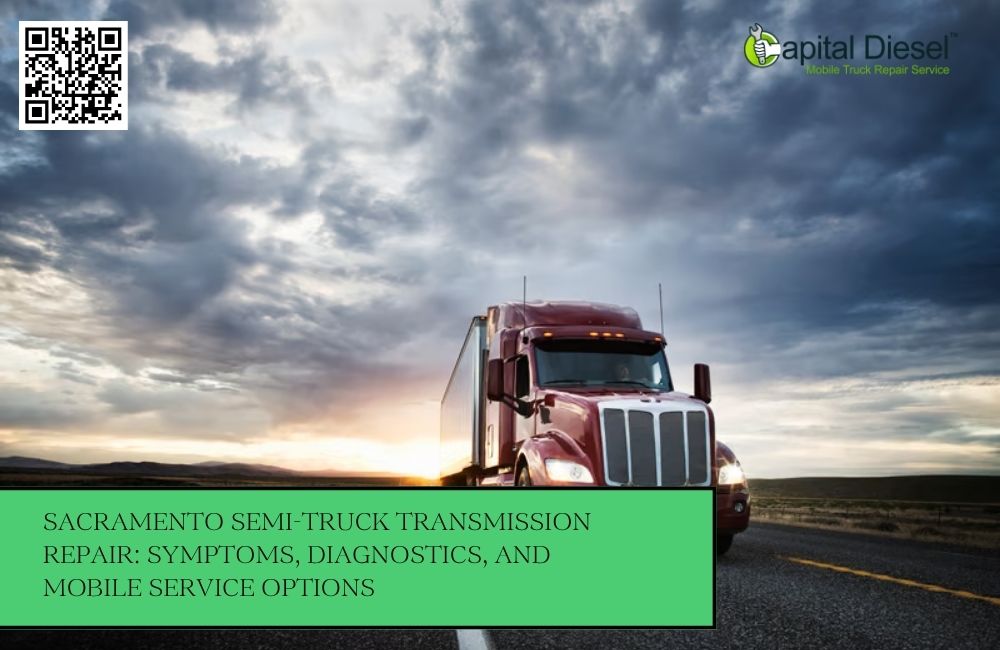
Sacramento Semi-Truck Transmission Repair: Symptoms, Diagnostics, and Mobile Service Options
Transmission trouble can quickly turn a working semi-truck into an expensive roadside problem. Delayed shifting, slipping gears, fluid leaks, vibration, or loss of pulling power may signal developing damage that should be inspected before the truck becomes undriveable. Professional Mobile Truck Repair gives Sacramento fleet operators access to on-site diagnostics and service without automatically sending the vehicle to a shop.
Capital Diesel Mobile Truck Repair provides mobile transmission, clutch, driveline, engine, electrical, brake, and roadside support for commercial trucks, trailers, RVs, buses, coaches, and fleet vehicles throughout Sacramento and nearby communities. Experienced technicians can evaluate many symptoms at a fleet yard, warehouse, jobsite, parking area, or roadside location and recommend the safest repair option.
Why Semi-Truck Transmission Problems Need Fast Attention
A heavy-duty transmission transfers engine power to the drive wheels while managing changing speeds, loads, and road conditions. Semi-trucks regularly operate under substantial strain from freight weight, stop-and-go driving, long highway routes, steep grades, and extended operating hours.
A small transmission concern can worsen quickly if the vehicle continues working under load. Delayed service may result in:
Complete loss of movement
Internal gear damage
Clutch failure
Driveline damage
Overheating
Missed deliveries
Towing expenses
Longer repair downtime
A professional Truck Repair provider should inspect the complete powertrain rather than assuming every shifting complaint requires a full transmission rebuild.
Common Signs of Semi-Truck Transmission Trouble
Transmission problems often produce noticeable changes before a complete failure occurs.
Delayed or Difficult Shifting
A transmission that hesitates, shifts slowly, or requires extra effort may have a fluid, clutch, linkage, electronic, pneumatic, or internal mechanical problem.
Drivers may notice:
Difficulty selecting a gear
Delayed engagement
Hard shifts
Gear changes at the wrong time
Inconsistent response under load
Fleet operators searching for Diesel Mechanics Near Me should request proper diagnostics before allowing the truck to continue on a demanding route.
Transmission Slipping
Slipping occurs when engine speed increases without a matching increase in vehicle speed.
Possible causes include:
Worn internal components
Low or contaminated fluid
Clutch wear
Electronic control faults
Pressure problems
Heat-related damage
Slipping should not be ignored because it can create additional heat and accelerate internal wear.
Unusual Noise
Grinding, whining, clunking, or rattling may indicate worn gears, bearings, synchronizers, mounts, or driveline components.
A noise that changes with speed, load, or gear selection can provide useful diagnostic clues.
Fluid Leaks
Transmission fluid helps lubricate, cool, and protect internal parts. A leak may lead to low fluid levels, poor shifting, overheating, and component damage.
Common leak areas include:
Seals
Gaskets
Cooler lines
Drain plugs
Transmission housing
Input or output shafts
A qualified Truck Mechanic Nearby can inspect the leak source and determine whether the truck can be repaired safely at its location.
Manual, Automated, and Automatic Transmission Problems
Semi-trucks may use manual, automated manual, or automatic transmissions. Each system has different components and diagnostic requirements.
Manual Transmission Issues
Manual transmission complaints may involve:
Clutch wear
Linkage problems
Synchronizer damage
Gear wear
Bearing noise
Difficulty selecting gears
Drivers may also experience clutch slipping, grinding, or failure to disengage fully.
Automated Manual Transmission Issues
Automated manual transmissions use electronic controls and actuators to operate a traditional-style gearbox.
Problems may involve:
Shift actuators
Sensors
Wiring
Control modules
Air pressure
Clutch calibration
Software or communication faults
A fault code may identify the affected system, but physical and electrical testing is still necessary.
Automatic Transmission Issues
Automatic transmissions may develop:
Delayed engagement
Harsh shifting
Overheating
Pressure loss
Torque-converter problems
Electronic control faults
Professional diagnostics help separate hydraulic, mechanical, and electronic causes.
Clutch Problems That Can Feel Like Transmission Failure
A worn or damaged clutch may create symptoms similar to a transmission problem.
Common clutch warning signs include:
Slipping under load
High engagement point
Difficulty shifting
Burning smell
Chatter or vibration
Poor acceleration
Grinding during gear changes
Clutch problems may involve the pressure plate, disc, release bearing, linkage, hydraulic components, or adjustment.
Before approving a major transmission repair, the clutch system should be inspected carefully.
Businesses searching for Large Truck Repair Near Me should choose technicians who understand the full engine-to-driveline power path.
Driveline Problems That Mimic Transmission Trouble
Vibration, clunking, or loss of smooth power delivery may come from the driveline rather than the transmission itself.
Possible causes include:
Worn universal joints
Driveshaft imbalance
Damaged carrier bearings
Loose mounts
Differential concerns
Axle problems
Misalignment
A complete inspection may include the transmission, clutch, driveshaft, bearings, joints, differential, and axles.
This broader approach reduces the risk of replacing expensive transmission components when the real issue is elsewhere.
How Mobile Transmission Diagnostics Work
On-site diagnostics help fleet managers understand the problem before deciding whether the truck requires roadside repair, scheduled service, or towing.
Step 1: Review the Driver’s Symptoms
The technician may ask:
When did the problem begin?
Does it happen cold, hot, or under load?
Which gears are affected?
Are warning lights present?
Has the transmission recently been serviced?
Are there leaks, smells, noises, or vibration?
Driver observations often reveal patterns that are not obvious during a short inspection.
Step 2: Check Fluid Condition and Level
Fluid may be inspected for:
Low level
Discoloration
Burning odor
Metal particles
Contamination
Evidence of overheating
Fluid condition can provide important clues about internal wear and maintenance history.
Step 3: Scan Electronic Systems
Modern transmissions use sensors, actuators, and control modules. Diagnostic equipment may retrieve faults related to:
Shift position
Clutch operation
Pressure
Temperature
Speed sensors
Communication errors
Actuators
Module power
Electronic faults should be confirmed before parts are replaced.
Step 4: Inspect Mechanical Connections
The technician may inspect:
Linkage
Mounts
Cables
Air lines
Wiring
Connectors
Driveshaft components
Clutch operation
Visible leaks
Accurate diagnostics are essential because transmission symptoms often involve several connected systems.
What Mobile Transmission Service Can Handle
Many inspections and smaller repairs can be completed on site.
Mobile services may include:
Fault-code diagnostics
Fluid and leak inspection
Wiring repair
Connector service
Sensor replacement
Linkage adjustment
Air-line repair
Clutch evaluation
Driveline inspection
Mount inspection
Control-system testing
Drivers searching for Mobile Semi Truck Repair Near Me may be able to avoid unnecessary towing when the fault involves an external component, electrical circuit, sensor, or adjustment.
Major internal damage, complete rebuilds, or extensive transmission replacement may still require shop equipment.
When Roadside Repair Is Appropriate
A transmission concern can become a roadside emergency when the truck loses movement, cannot select a gear, leaks heavily, or displays critical warnings.
Drivers should stop and request Roadside Truck Repair if the truck has:
Sudden loss of drive
Severe grinding
Heavy fluid loss
Burning smell
Transmission overheating
Repeated gear disengagement
Extreme vibration
Critical warning messages
When searching for Roadside Truck Repair Near Me, provide the exact location, transmission type, symptoms, warning lights, and whether the truck can move safely.
A responsive Truck Road Service provider can determine whether an on-site repair is possible or towing is the safest option.
Why Sacramento Operating Conditions Matter
Sacramento semi-trucks operate through Interstate 5, Interstate 80, Highway 50, Highway 99, industrial corridors, distribution centers, construction areas, and agricultural routes.
Local conditions that can increase transmission stress include:
Stop-and-go traffic
Hot summer temperatures
Heavy freight
Long idle periods
Frequent starts and stops
Regional grades
Trailer towing
Warehouse maneuvering
Heat and heavy loads can accelerate fluid breakdown and component wear. Fleets operating under demanding conditions may need more frequent inspections than mileage alone suggests.
Transmission Maintenance for Commercial Fleets
A strong Fleet Maintenance program can help reduce unexpected transmission failures.
Preventive service may include:
Fluid-level checks
Leak inspections
Temperature monitoring
Clutch adjustment
Linkage inspection
Driveline checks
Mount inspection
Diagnostic scanning
Driver-report review
Scheduled fluid service
Businesses searching for Truck Service Near Me should choose a provider that evaluates transmission health alongside the engine, cooling system, driveline, and trailer.
Trailer Problems Can Increase Transmission Strain
A trailer with brake drag, axle problems, overloaded cargo, tire issues, or poor alignment can force the tractor to work harder.
Companies searching for Trailer Repair near Me should inspect:
Trailer brakes
Wheel bearings
Axles
Suspension
Tires
Alignment
Load distribution
Correcting trailer resistance can reduce stress on the transmission, clutch, driveline, and engine.
Transmission Support for RVs, Buses, and Coaches
Capital Diesel Mobile Truck Repair also provides Mobile RV Repair and drivetrain support for buses, campers, coaches, and motorhomes.
These large vehicles may experience:
Delayed shifting
Transmission overheating
Fluid leaks
Electronic faults
Loss of power
Driveline vibration
Gear-selection problems
Mobile diagnostics can be completed at a residence, campground, storage facility, fleet yard, parking area, or roadside location.
Choosing a Sacramento Transmission Repair Provider
Fleet operators should look for:
Heavy-Duty Experience
Semi-truck transmissions require specialized knowledge of manual, automated, automatic, clutch, and driveline systems.
Advanced Diagnostic Equipment
Modern transmission faults often involve electronic modules, sensors, and communication networks.
Honest Repair Recommendations
The provider should explain whether the problem involves the transmission, clutch, wiring, air system, driveline, or another component.
Mobile Capability
On-site diagnostics can reduce towing and help fleet managers make faster repair decisions.
Broad Commercial Vehicle Knowledge
Transmission performance should be evaluated alongside engine power, cooling, axles, tires, and trailer condition.
Drivers searching for Truck Road Service Nearby or Semi Road Service Near Me should confirm that the provider handles heavy-duty transmission-related calls.
Sacramento-Area Mobile Transmission Service
Capital Diesel Mobile Truck Repair serves Sacramento and surrounding communities within approximately a 50-mile radius, including Antelope, Arden-Arcade, Carmichael, Citrus Heights, Davis, Elk Grove, Fair Oaks, Folsom, North Highlands, North Natomas, Rancho Cordova, Rio Linda, Rocklin, Roseville, West Sacramento, Wilton, and Woodland.
Commercial operators searching for Truck Repair Near Me can request transmission diagnostics, clutch inspection, driveline service, emergency support, or scheduled maintenance.
Address Transmission Symptoms Before the Truck Stops Moving
Delayed shifting, slipping, vibration, fluid leaks, warning lights, and unusual noise should never be ignored. Early diagnostics can help Sacramento fleet operators avoid catastrophic transmission damage, unexpected towing, and extended downtime.
Capital Diesel Mobile Truck Repair provides transmission diagnostics, clutch repair, driveline service, roadside assistance, and professional Truck Repair for semi-trucks, trailers, RVs, buses, coaches, and fleet vehicles.
Contact the team when your truck shifts differently, loses pulling power, leaks fluid, or needs mobile diagnostics at your fleet yard, warehouse, jobsite, or roadside location.
Business Information
Capital Diesel Mobile Truck Repair
941 Vinci Ave Sacramento, CA 95838
Phone: +1 (916) 949-4882